

Real Parent Experience + Research · Updated for 2026

Find the Breast Pump That Actually Fits Your Life Best Wearable & Hands-Free Pumps (2026)

Quick Answer

Direct Verdict: Which Breast Pump Should You Choose in 2026?

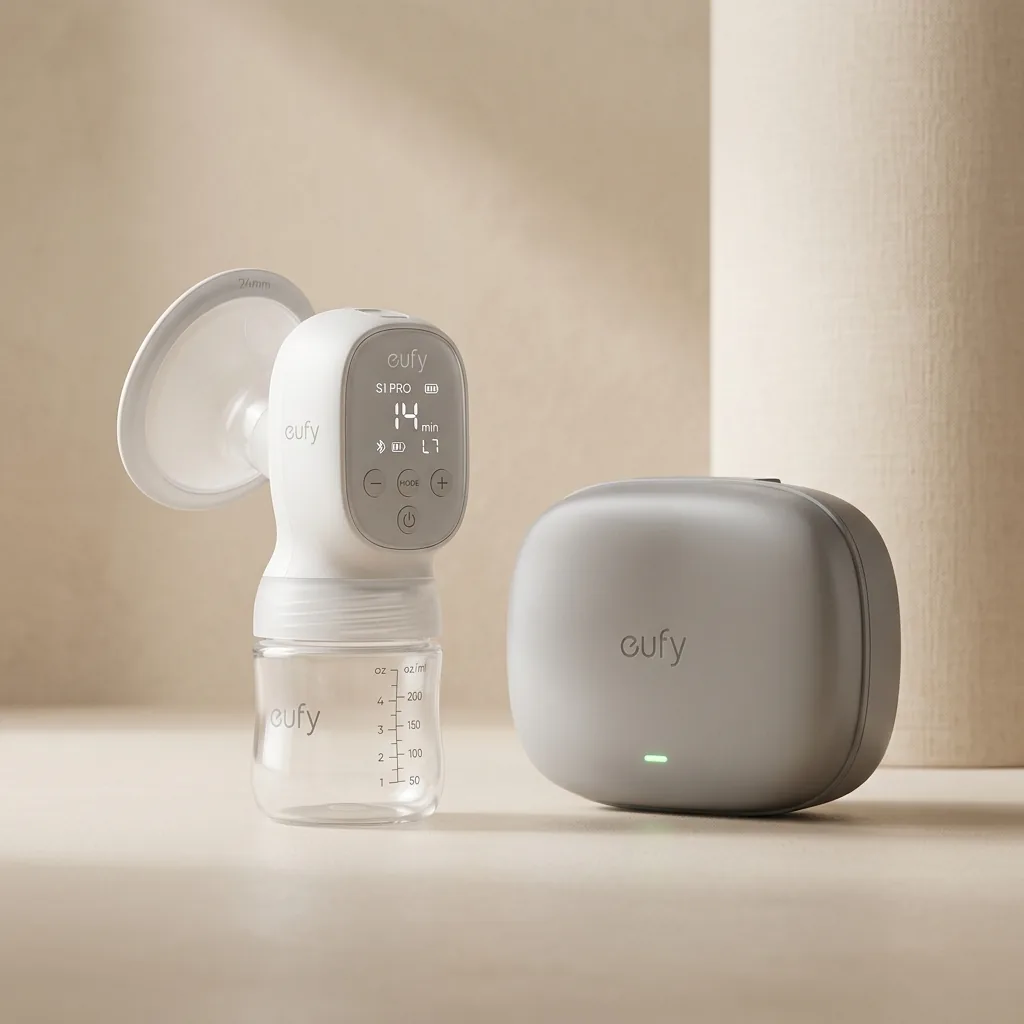
If you need maximum milk output and portable charging freedom, the Eufy S1 Pro is our top recommendation for 2026, pairing 300 mmHg hospital-strength suction with HeatFlow™ thermal warming to encourage faster letdowns. For video meetings and office discretion, the Elvie Pump (< 32 dB) is virtually silent. If you want gentle all-silicone comfort under $200, the Momcozy M5 offers the best balance of price and daily usability.

Choosing a breast pump can feel completely overwhelming. From suction levels to parts cleaning and workplace discretion, what looks great on a spec sheet doesn't always work in real daily life. We cut through the marketing noise by combining verified engineering data, real parent experience, and transparent tradeoffs—so you can find the pump that actually fits your routine.

Real Parent Focus Usability over hype
Research-Backed Verified suction & sound
Clear Tradeoffs Every catch explained
Insurance Insights ACA tiers & upgrade fees
4 Free Tools Sizing, storage & finder

Start With What You Need

Breast pumps are not one-size-fits-all. Different pumping routines call for different motor formats. Choose the path that matches your current stage, schedule, or insurance status:

Hands-Free Freedom

Wearable Breast Pumps

Tubeless, all-in-bra motors designed for multitasking, office discretion, and pumping without being tethered to a wall outlet.

Explore Top 6 Wearables →
Clinical Workhorses

Electric Breast Pumps

Double electric bedside and wall-powered pumps built for high-volume emptying, establishing early supply, and primary exclusive pumping.

Explore Electric Pumps →
Compact & Mobile

Portable Breast Pumps

Pocket-sized rechargeable motors with lanyard clips that bridge bedside suction strength with cordless mobility around the home.

Explore Portable Pumps →
Coverage & Copays

Pumps Through Insurance

Learn how the Affordable Care Act covers standard electric pumps at 100% and how wearable upgrade fees and in-network DMEs work.

Read Insurance Guide →
Head-to-Head Diff

Compare Any Two Pumps

Inspect verified suction levels, motor sound ratings, container capacities, and included flange kit sizes side by side.

Open Comparison Hub →
Interactive Tool

Not sure which wearable pump fits you?

Answer 8 practical questions about your pumping frequency, workplace discretion, and budget to get a personalized product shortlist.

Use Breast Pump Finder →

The 6 Best Wearable Breast Pumps

Our editorial evaluations focus on what parents tell us matters most: comfortable letdowns, reliable suction, quiet office motors, and manageable sink cleaning turnover.

#2 Best Value & Comfort
Momcozy Mobile Flow M5 wearable breast pump

Momcozy Mobile Flow M5

Best Value & All-Day Silicone Comfort
Research-Based Pick
Why We Recommend It: We recommend the M5 as our value leader because its horizontal motor sits flush in nursing bras without awkward top projection, paired with soft double-fit silicone flanges that cushion areolar tissue.
Best For: Parents wanting gentle all-day silicone comfort, horizontal in-bra discretion, and high performance under $200.
The Catch / Tradeoff: Slightly thicker profile in fitted tops; app connectivity is basic compared to high-end smart hubs.
SUCTION (VERIFIED) 285 mmHg
BATTERY (EST.) 120–150 min
CAPACITY 5.4 oz (160ml)
FLANGE SIZES 5 in Box (17–27mm)
  • Soft double-fit silicone flanges cushion areolar tissue and prevent edge pinching
  • Horizontal motor profile reduces top-heavy bra bulge and forward projection
$160 – $200 Double Pump Set
★★★★★ 4.8 / 5
Read Review Compare Specs Verified specifications
#3 Best for Working Shifts
Willow Go wearable breast pump

Willow Go

Best for Active Movement & Shift Work
Research-Based Pick
Why We Recommend It: We chose the Willow Go for high-mobility routines because its closed diaphragm seal prevents leaks when walking, bending over cribs, or moving through active workplace shifts.
Best For: Active shift workers, healthcare professionals, and busy parents who need spill-proof mobility and bending freedom.
The Catch / Tradeoff: Heavier in-bra assembly (13.6 oz with milk) requires a firm compression bra to prevent downward drift.
SUCTION (VERIFIED) 280 mmHg
BATTERY (EST.) 120–150 min
CAPACITY 5.0 oz (Opt 7.0 oz)
CONTROL Smart App + Hub
  • High-vacuum 280 mmHg suction with 15 granular levels for tailored letdowns
  • Secure in-bra seal holds firmly during active walking, bending, and shift tasks
$320 – $360 Double Pump Set
★★★★★ 4.7 / 5
Read Review Compare Specs Verified specifications
#4 Quietest Ranked (< 32 dB)
Elvie Pump wearable breast pump

Elvie Pump

Best for Silent Office Discretion (< 32 dB)
Research-Based Pick
Why We Recommend It: We include the Elvie Pump because it is the only wearable utilizing patented piezoelectric micro-pumping, operating below 32 dB to remain completely inaudible on conference calls.
Best For: Working professionals needing ultra-quiet office discretion, video meeting stealth, and sleek under-clothing fit.
The Catch / Tradeoff: Highest price tag ($499–$549 double); lower peak suction (240 mmHg) may feel gentle for parents accustomed to heavy bedside pumps.
SUCTION (VERIFIED) 240 mmHg
BATTERY (EST.) 100–120 min
CAPACITY 5.0 oz (150ml)
NOISE (VERIFIED) < 32 dB (Piezo)
  • Patented piezoelectric motor (< 32 dB) is virtually inaudible on Zoom calls and meetings
  • Ultra-slim teardrop profile fits discreetly under tailored professional clothing
$499 – $549 Double Pump Set
★★★★★ 4.7 / 5
Read Review Compare Specs Verified specifications
#5 Best Lightweight Anatomy Cups
Medela Freestyle Hands-Free wearable breast pump

Medela Freestyle Hands-Free

Best for Fast 3-Part Cleaning & Frequent Use
Research-Based Pick
Why We Recommend It: We recommend Medela's hands-free system because its cups weigh a featherlight 2.7 oz (76g)—exerting zero downward drag on bra straps—and contain only three dishwasher-safe parts per side.
Best For: Frequent daily pumpers who want the lightest in-bra cup weight and lightning-fast 3-piece sink cleanup.
The Catch / Tradeoff: Separate pocket-sized motor connects via thin tubing; not completely wireless/tubeless like single-piece hubs.
SUCTION (VERIFIED) 245 mmHg
BATTERY (EST.) 120 min
CAPACITY 5.0 oz (150ml)
CUP WEIGHT 2.7 oz (76g)
  • Ultralight 2.7 oz in-bra cups exert minimal downward pull on nursing bras
  • Only 3 dishwasher-safe parts per cup dramatically speeds up daily washing turnover
$299 – $349 Double Pump Set
★★★★★ 4.7 / 5
Read Review Compare Specs Verified specifications
#6 Best Budget Option
Momcozy S12 Pro wearable breast pump

Momcozy S12 Pro

Best Budget Wearable Under $150
Research-Based Pick
Why We Recommend It: We include the S12 Pro as our budget pick because it delivers 285 mmHg vacuum, a 6.0 oz milk cup, and an intuitive top LED screen showing real-time elapsed minutes under $140.
Best For: Budget-conscious parents wanting reliable suction, generous 6 oz capacity, and a top-facing digital countdown display under $140.
The Catch / Tradeoff: Vertical top-heavy motor creates noticeable forward bra bulge; audible motor vibration (~50 dB).
SUCTION (VERIFIED) 285 mmHg
BATTERY (EST.) 140–180 min
CAPACITY 6.0 oz (180ml)
PRICE VALUE Under $140
  • Top-facing digital display shows suction level, mode, and minute countdown timer
  • Generous 6.0 oz container capacity handles larger milk output without pauses
$110 – $140 Double Pump Set
★★★★★ 4.6 / 5
Read Review Compare Specs Verified specifications

Breast Pumps Through Insurance: What to Know Before You Buy

Under the Affordable Care Act (ACA), most U.S. commercial health plans and state Medicaid programs cover a double electric breast pump. Here is how coverage actually works in practice:

100% Covered Standard

Standard Double Electric Pumps

Traditional wall-powered electric pumps (like the Spectra S2 Plus or Medela Pump In Style) are frequently fully covered by in-network medical suppliers with $0 out-of-pocket copay. They serve as reliable, clinical-grade primary workhorses for home and stationary desk pumping.

Upgrade Fee Models

Wearable & Rechargeable Upgrades

Premium cordless wearables (like Willow, Elvie, or Momcozy) or battery-powered electrics (like the Spectra S1) typically require an out-of-pocket upgrade fee ($30 to $150+). Your insurance provider pays their contracted base equipment rate, and you pay the difference.

Ordering Process

In-Network Medical Equipment (DME)

To use your health insurance, you usually order through contracted medical equipment suppliers (such as Aeroflow Breastpumps, Byram Healthcare, or Edgepark) rather than regular retail stores. You will typically need a prescription from your OB-GYN or midwife.

Tax Advantages

FSA & HSA Reimbursement

If your desired wearable is not fully covered by insurance or you pay an upgrade fee, breast pumps and lactation supplies (including replacement duckbill valves, collection cups, and milk storage bags) are IRS-qualified medical expenses eligible for pre-tax FSA/HSA funds.

Plan Variation Notice: Specific coverage criteria, eligible pump brands, ordering windows (prenatal vs. postpartum), and replacement accessory benefits vary by health plan and state Medicaid rules. We recommend contacting your insurer or checking an authorized in-network DME supplier to verify your exact benefits.
Explore Insurance-Covered Electric Pumps → Find Your Best Fit via Finder →

Wearable Breast Pump Head-to-Head Specification Matrix

Compare all 6 top-rated hands-free and portable breast pumps across verified suction strength, battery endurance, noise levels, weight, and price.

Model Peak Suction Thermal Warming Battery Runtime Capacity Sound Level Weight in Bra Flange Sizing Kit Typical Price Evaluation
Eufy S1 Pro 300 mmHg ★ HeatFlow™ (95°–105°F) 120–150m (5d w/ case) 5.0 oz (150ml) ~46 dB 7.4 oz (210g) 17, 19, 21, 24mm (4 sizes) $280 – $350 Review
Momcozy M5 285 mmHg None 120–150 min 5.4 oz (160ml) ~48 dB 8.1 oz (230g) 17, 19, 21, 24, 27mm (5 sizes) $160 – $200 Review
Willow Go 280 mmHg (15 levels) None 120–150 min 5.0 oz (Opt 7.0 oz) ~52 dB 13.6 oz (385g) 21, 24mm included $320 – $360 Review
Elvie Pump 240 mmHg None 100–120 min 5.0 oz (150ml) < 32 dB (Piezo) 7.4 oz (210g) 24, 28mm included $499 – $549 Review
Medela Freestyle 245 mmHg None 120 min 5.0 oz (150ml) ~48 dB 2.7 oz (Cup only) 21, 24mm 105° oval $299 – $349 Review
Momcozy S12 Pro 285 mmHg None 140–180 min (5–6 sessions) 6.0 oz (180ml) ≤ 50 dB 8.8 oz (250g) 24mm included $110 – $140 Review

6 Ways to Get Better Results From a Wearable Pump

Essential adjustments that improve milk removal, reduce discomfort, and prevent common wearable pumping frustrations:

01

Maintain Proper Bra Compression

A loose bra is a primary reason wearables lose suction or break seal. Use a structured, non-underwire compression nursing bra or bra extenders to hold the cups firmly against the chest wall without excessive pressure.

Key takeaway: Firm, even contact preserves vacuum efficiency throughout your pumping session.
02

Apply Gentle Warmth for Letdowns

Cold, rigid flanges can feel uncomfortable and slow your letdown reflex. Applying a warm compress for 2–3 minutes before pumping or using a pump with integrated thermal heating promotes relaxation and eases milk flow.

Key takeaway: Warmth supports comfort and relaxation, helping milk express more steadily.
03

Size by Nipple Base (Not Areola)

Measure only the diameter of your nipple base before pumping, ignoring the darker areola. Add 2mm to 3mm of clearance to choose your insert size (commonly 17mm, 19mm, or 21mm) to prevent friction and swelling.

Key takeaway: Accurate sizing prevents tissue swelling, nipple friction, and incomplete emptying.
04

Tilt Slowly Along Designated Spouts

When transferring expressed milk to bottles or storage bags, tilt slowly along the designated pour vent. Inverting the container too abruptly can back milk into the air vents or diaphragm chamber, risking motor moisture.

Key takeaway: Controlled pouring prevents spills and shields delicate motor diaphragms.
05

Inspect and Refresh Silicone Wear Parts

Duckbill valves and silicone membranes gradually lose elasticity over 1 to 3 months of daily use and dishwashing. If suction feels diminished or sessions drag out, replace inexpensive silicone parts before suspecting motor failure.

Key takeaway: Fresh silicone valves restore airtight suction at a fraction of pump replacement cost.
06

Adhere to Safe Sanitation Protocols

The CDC recommends thoroughly washing pump parts with soap and warm water after each use—especially for infants under 2 to 3 months or those with compromised immunity. Avoid refrigerator shortcuts during the newborn window.

Key takeaway: Following CDC sanitization guidance keeps vulnerable newborns safe from bacterial contamination.

Wearable vs. Traditional Wall Pumps: Can a Wearable Be Your Only Pump?

While modern high-performance wearables (such as the 300 mmHg Eufy S1 Pro or 280 mmHg Willow Go) empty breasts far better than early wireless pumps, exclusively pumping parents often benefit from a hybrid strategy:

  • Primary Morning & Bedtime Sessions: Use an AC bedside wall pump for rapid high-volume emptying when establishing early supply.
  • Daytime, Work & Commute Sessions: Use a high-efficiency wearable pump for hands-free mobility, office discretion, and sanity during busy daytime routines.
Read Wearable vs Electric Guide → Find Your Routine Fit 🎯

Free Interactive Breast Pump Tools

Calculate your correct flange size, find tailored model recommendations, look up CDC storage guidelines, or compare specifications head-to-head.

Quick Consultation

Find Your Tailored Wearable Pump

Answer 3 quick questions or use our Full Breast Pump Finder Engine →

Step 1: How often will you use your wearable pump?

Step 2: What is your primary priority?

Step 3: What is your target budget?

Sizing Guide Aid

Nipple Measurement & Flange Sizing Calculator

Slide to your measured nipple base diameter (in millimeters) before pumping to see suggested starting flange sizes and silicone insert advice.

SUGGESTED STARTING FLANGE SIZE 19 mm

Read Complete Flange Sizing Guide →
Based on CDC Guidance

Breast Milk Storage & Shelf Life Calculator

Select a storage environment to see recommended durations based on CDC infant feeding safety guidelines.

RECOMMENDED STORAGE DURATION Up to 4 Hours
Ideal room temperature is 77°F (25°C) or colder.
Read Detailed Milk Storage Guide →
Live Spec Diff

Compare Any Two Wearable Pumps

Select two pumps below to see immediate specification differences and advantages.

Explore All 4 Interactive Tools in the Tools Hub

Popular Wearable Pump Comparisons

In-depth head-to-head articles comparing real-world output, motor sound, flange fit, and battery performance.

Brand Face-Off

Momcozy vs. Willow

Comparing budget silicone comfort vs premium spill-proof shift mobility.

Read Full Comparison →
Budget Shootout

Momcozy M5 vs. S12 Pro

Teardrop horizontal comfort vs top-screen digital timer & large 6 oz cups.

Read Full Comparison →
Premium Showdown

Willow Go vs. Elvie Pump

Hospital-grade 280 mmHg suction vs patented < 32 dB piezoelectric silence.

Read Full Comparison →

Why Parents Trust Breast Pump Finder

We built this site because choosing a breast pump is overwhelming and full of conflicting marketing claims. Here is how we evaluate products:

1. Specification Verification

We verify motor suction ratings against manufacturer engineering sheets and cross-check published acoustic decibels and battery runtimes.

2. Cleaning & Part Dissection

We count daily parts, evaluate dishwasher compatibility, and examine silicone membrane durability to identify sink washing bottlenecks.

3. Community Pattern Analysis

We synthesize recurring themes and pain points from public parenting forums and pumping communities to understand real-life use.

4. Transparent Tradeoffs

Every product has downsides. We clearly outline real-world watch-outs—such as in-bra weight, forward bulge, or replacement part costs.

5. Free Interactive Tools

From our 8-question match finder to nipple base flange calculators and CDC milk storage timers, our utilities provide immediate answers.

6. Continuous Maintenance

We perform regular specification audits and market price checks, retiring outdated models and updating firmware and app notes.

Read Full Editorial Methodology & Ethics Policy →

Frequently Asked Questions

What is the best wearable breast pump in 2026?

The Eufy S1 Pro is our #1 Best Overall recommendation for 2026 due to its HeatFlow™ letdown warming, 300 mmHg hospital-grade vacuum, and 5-day power bank case. For silicone comfort under $200, the Momcozy M5 is our top recommendation, while the Willow Go leads for active shift workers.

Can a wearable breast pump replace my traditional wall pump?

For many working parents, modern high-suction wearables (300 mmHg Eufy or 280 mmHg Willow) effectively empty breasts during daytime sessions. However, exclusively pumping mothers often maintain a hybrid routine, keeping an AC bedside pump for early morning high-volume emptying.

Why does bra fit matter so much for wearable breast pumps?

Wearables rely on firm in-bra compression to maintain an airtight seal against the chest wall. A loose bra allows the flange to pull away, causing up to a 50% loss in effective suction and milk yield. Always wear a supportive, non-underwire compression nursing bra.

What is the quietest wearable breast pump for Zoom calls?

The Elvie Pump operates below 32 dB using patented piezoelectric micro-pumping technology, making it virtually silent and completely masked by normal ambient office noise or video calls.

Ready to Find Your Routine Match?

Answer 8 straightforward questions about how often you pump, whether you need office discretion, and your budget to get an instant personalized shortlist.

Launch Breast Pump Finder 🎯 Browse All 4 Tools →